If you're self-publishing a book, you've likely encountered the term ISBN and wondered whether you actually need one. The short answer: yes, if you want your book available through bookstores, libraries, or major online retailers. But the details matter—and the choices you make can impact how your book is listed, who appears as the publisher, and your ability to distribute widely.
This guide breaks down everything self-publishers need to know about ISBNs in 2026, from understanding what they actually do to avoiding costly mistakes that could limit your book's reach.
—
What an ISBN Actually Is (and Why You Need One)
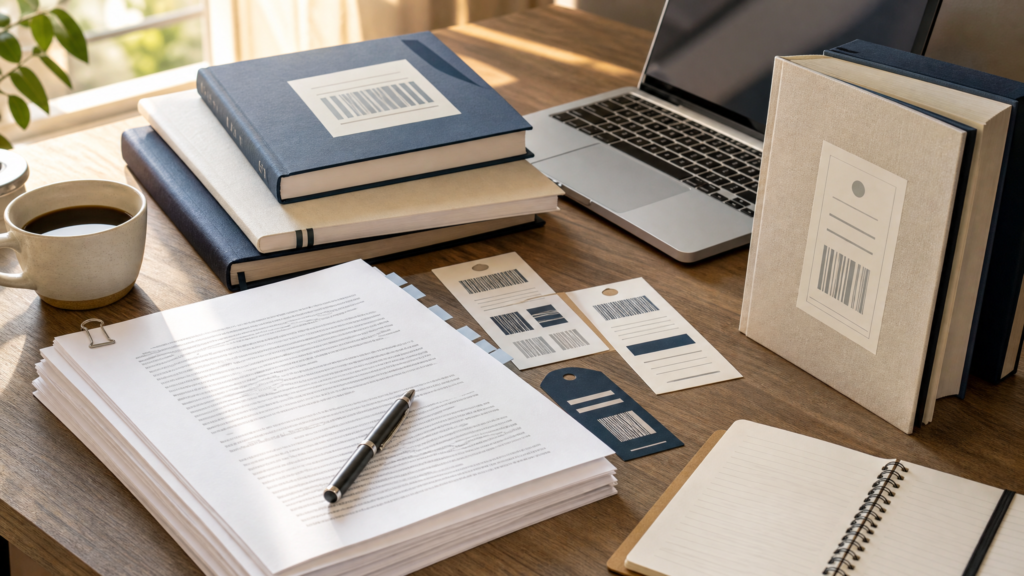
ISBN stands for International Standard Book Number. It's a unique 13-digit identifier assigned to every published book, functioning like a digital fingerprint that allows booksellers, libraries, and distributors to track inventory, process orders, and manage sales data.
For self-publishers, an ISBN serves three critical functions:
- Retailer acceptance: Amazon, Barnes & Noble, Ingram, and most other retailers require an ISBN to list your book in their catalog.
- Library access: OverDrive, Libby, and physical library systems use ISBNs to categorize and distribute books.
- Professional credibility: Books with ISBNs appear in industry databases like Books in Print, making them discoverable by literary agents, reviewers, and booksellers.
Without an ISBN, your distribution options shrink dramatically. You could still sell directly through your own website, but you'd be locked out of the retail and library ecosystems that drive the majority of book sales.
—
Free vs. Purchased ISBNs: What's the Difference?
This is where many self-publishers make decisions that cost them later. You have two primary options:
Free ISBNs from Self-Publishing Platforms
Amazon's Kindle Direct Publishing (KDP), Draft2Digital, and similar platforms offer free ISBNs when you publish through their systems. On the surface, this seems like a no-brainer—why pay for something free?
Here's the catch: the publisher listed on a free ISBN defaults to the platform's name. Your book will appear as published by "Amazon Publishing" or "Draft2Digital" rather than your own imprint. This creates several problems:
- You don't build recognizable publisher branding
- Bookstores and libraries may dismiss your title as "self-published"
- You can't easily track sales through industry databases
Purchasing Your Own ISBN
When you buy your own ISBN through Bowker (the official US ISBN provider), you gain full control. You can:
- List your own imprint or publishing company as the publisher
- Build brand recognition across multiple titles
- Access more granular sales reporting through Bowker's platform
Cost: A single ISBN from Bowker costs $125 in 2026. A block of 10 costs $295. For most self-publishers releasing multiple titles, the block makes more financial sense.
Recommendation: If you're serious about building a publishing career, purchase your own ISBNs. The branding control alone is worth the investment.
—
How to Get Your ISBN in 2026
Getting your own ISBN is straightforward, but there are steps to follow correctly:
- Register your imprint: Before purchasing ISBNs, decide on your publishing brand name. This is what will appear as the publisher. Create an imprint name that reflects your genre or mission (e.g., "Mystery Lane Press" for mystery novels).
- Purchase through Bowker: Go to myidentifiers.com, Bowler's official ISBN portal. You'll need to create an account and register your imprint information.
- Assign your ISBN correctly: When you upload your book to distribution platforms, you'll input your ISBN and associate it with your imprint. Make sure this matches exactly—what you enter in Bowker should match what you enter in KDP, Ingram, etc.
- Register your book metadata: After receiving your ISBN, register it in Books in Print to ensure your book appears in industry databases. This costs extra but improves discoverability.
Timeline: ISBNs are typically issued immediately upon purchase, but allow 2-3 business days for the information to propagate through retail databases.
—
When You Need Multiple ISBNs
One of the most common questions self-publishers ask is: "How many ISBNs do I need?"
The answer depends on your publishing situation:
| Scenario | ISBNs Needed | |———-|————–| | Single ebook on one platform | 1 | | Print and ebook versions | 2 (separate ISBNs for each format) | | Hardcover, paperback, ebook | 3 | | Multiple editions (revised, anniversary) | 1 per edition | | Different imprint names | 1 per imprint |
Key principle: Each distinct format and edition requires its own ISBN. However, you can use the same ISBN across platforms (e.g., the same ISBN for your paperback on Amazon and IngramSpark) as long as the format remains identical.
Case study: Author Sarah Chen released her debut novel in 2026 as both ebook and paperback. She purchased a single ISBN thinking it would cover both formats. When she tried to distribute through IngramSpark, she learned her ISBN was already registered to the ebook format. She had to purchase an additional ISBN ($125) to list the paperback. Total cost: $250 instead of $125. Lesson learned—plan ahead.
—
Common ISBN Mistakes to Avoid
After working with hundreds of self-publishers, I've seen these mistakes repeatedly cost people time and money:
- Using a free ISBN but wanting your own publisher name: This is the most frequent error. Once an ISBN is registered to a platform's publisher name, you cannot change it. You're stuck with "Amazon Publishing" as your publisher or must purchase a new ISBN.
- Inconsistent imprint names: If you register as "Blue Sky Books" in Bowker but enter "BlueSky Books" (no space) in KDP, this creates duplicate records and confuses retailers. Be precise and consistent.
- Forgetting to register metadata: Buying an ISBN doesn't automatically add your book to Books in Print. Without this registration, your book won't appear in library ordering systems or literary databases.
- Purchasing before deciding on branding: Authors sometimes buy ISBNs hastily, then later want to rebrand their imprint. Each ISBN can only be associated with one imprint. Plan your brand before purchasing.
—
Case Study: How ISBN Choices Affect Distribution
In 2026, indie author Marcus Webb released three thrillers within six months. His first two used free ISBNs from KDP. His third book—and every subsequent release—he purchased through Bowker using his imprint, "Redstone Thriller Press."
The difference in discoverability was stark:
- Books 1-2 (free ISBNs): Listed as "Amazon Publishing" in Barnes & Noble's system. Neither appeared in local library catalogs because library systems filter out major platform publishers.
- Book 3+ (purchased ISBNs): Listed as "Redstone Thriller Press." All three titles were orderable through Ingram and appeared in OverDrive library catalogs.
By 2026, Marcus's "Redstone Thriller Press" titles had generated 2,400 library checkouts through OverDrive—traffic that never would have found his earlier books. His total additional cost: $295 for a 10-pack of ISBNs.
—
Key Takeaways
- An ISBN is required for retail and library distribution—without one, your options are severely limited
- Free ISBNs from platforms list the platform as your publisher, killing your branding
- Purchase your own ISBNs through Bowker ($125 for one, $295 for 10) to maintain full control
- Each format (ebook, paperback, hardcover) needs its own ISBN
- Be consistent with your imprint name across all platforms and databases
—
Next Steps
- Decide on your imprint name before purchasing ISBNs—make it memorable and genre-appropriate
- Purchase your ISBNs through myidentifiers.com and register your imprint
- Plan your format strategy—determine whether you're releasing ebook, print, or both, and buy accordingly
- Register your metadata in Books in Print to improve discoverability
- List your book across distribution platforms using your new ISBN and imprint
The upfront cost of proper ISBN management is minimal compared to the long-term benefits of professional distribution and brand recognition. Make the right choice now, and your future library of titles will thank you.