Audiobooks are no longer a nice-to-have addition to your publishing business—they're an essential revenue stream. In 2026, the audiobook market continues to boom, with listeners spending an average of 17 hours per week consuming audio content. For indie authors, the question isn't whether to produce an audiobook, but how to do it cost-effectively without sacrificing quality.
This guide breaks down the real costs of audiobook production in 2026, from budget-friendly DIY options to professional narration, so you can make informed decisions for your publishing business.
—
What Drives Audiobook Production Costs
Several factors determine how much you'll pay to produce an audiobook. Understanding these variables helps you budget accurately and avoid surprise expenses.
Key cost factors include:
- Narration style: Single narrator vs. full cast productions
- Word count: Longer books require more recording and editing time
- Narrator rates: Prices range from $50 to $400+ per finished hour (PFH)
- Studio quality: Home recording setups vs. professional studios
- Post-production: Editing, mastering, and audio engineering
- Platform fees: Distribution costs for ACX, Findaway, and others
For a typical 80,000-word novel (approximately 8-9 hours of narration), expect to invest anywhere from $400 to $3,500+ depending on your production approach.
—
Option 1: Royalty Share vs. Per-Finished-Hour Rates
Most indie authors produce audiobooks through ACX (Audiobook Creation Exchange), which offers two payment models:
Royalty Share (Free Upfront, Share Future Earnings)
- You pay nothing upfront
- You split royalties 50/50 with the narrator
- Narrators often pick this for traditionally published backlist or proven sellers
- Best for: Established authors with strong sales history
Per-Finished-Hour (PFH) Payment
- You pay a flat rate per completed hour of audio
- Rates in 2026 range from $50 to $400+ PFH
- Typical professional narration: $150-$300 PFH
- You retain 100% of royalties
- Best for: Authors who want full control and faster ROI
Case Study: Author J. Miller self-published a 95,000-word sci-fi novel. Using ACX PFH at $200/hour, with 10 hours of finished audio, they paid $2,000 upfront. Within 18 months, the audiobook generated $4,200 in royalties—more than double the production cost.
—
Option 2: Professional Studios and Narrators
For authors seeking premium production quality, working with a professional narrator in a studio remains the gold standard.
Average Professional Narrator Rates (2026)
| Experience Level | Rate per Finished Hour | |—————–|————————| | New narrators | $50-$100 | | Mid-level professionals | $150-$250 | | Top-tier voice actors | $300-$450 | | Celebrity narrators | $1,000+ |
What You're Paying For
Professional studios charge more because they include:
- Recording time: Typically 2-3 hours of studio time per finished hour
- Editing: Removing mistakes, dead air, and background noise
- Mastering: Final audio polish for consistent quality
- QC (Quality Control): Ensuring audio meets ACX/Findaway technical standards
- Narration talent: Experienced performers bring characters to life
Example: A 12-hour business book narrated by a mid-level professional at $200 PFH costs approximately $2,400 for narration alone. With studio fees, expect to invest $3,000-$4,500 total.
—
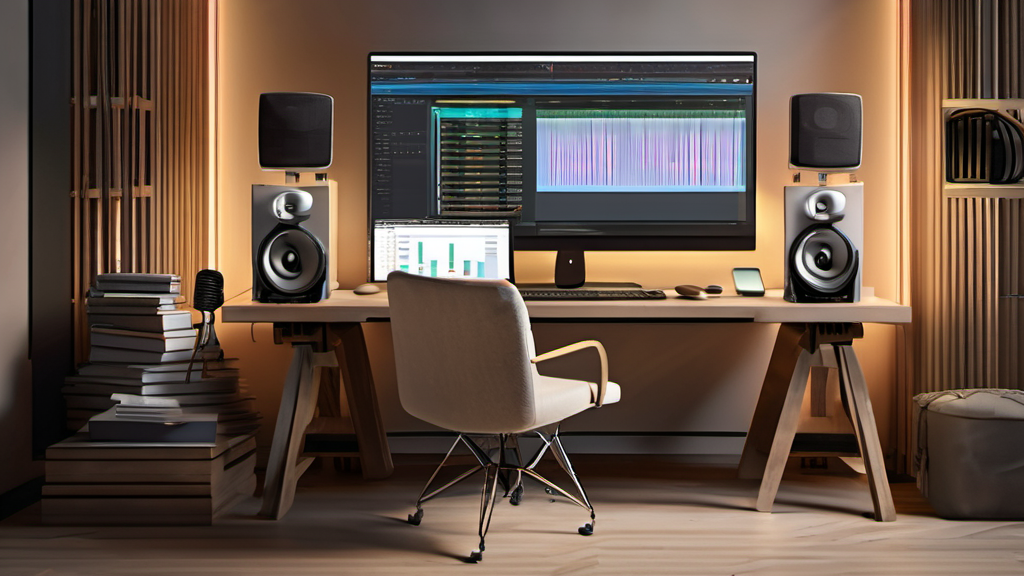
Option 3: DIY Audiobook Production
Producing your own audiobook is the most budget-friendly option, but it requires significant time investment and technical skill.
Equipment Costs
For a basic home studio, plan to spend:
- Microphone: $50-$300 (USB condenser mics like Audio-Technica ATR2100x)
- Headphones: $30-$150 (closed-back for monitoring)
- Audio interface: $50-$200 (Focusrite Scarlett Solo is popular)
- Acoustic treatment: $50-$200 (foam panels, blankets)
- Software: $0-$200 (Audacity is free; Adobe Audition is $23/month)
Minimum startup cost: Approximately $150-$300 for basic gear.
Hidden Time Costs
DIY production is time-intensive:
- Recording: 3-5 hours per finished hour
- Editing: 2-4 hours per finished hour
- Learning curve: Weeks to months to achieve acceptable quality
Case Study: Author R. Chen produced their own 6-hour fantasy audiobook entirely at home. They invested $250 in equipment and approximately 40 hours of total work. The finished product passed ACX's quality review, and they've earned $1,800 in royalties over two years—a strong ROI, but only because they had prior audio editing experience.
—
Distribution Costs and Platform Fees
Once your audiobook is produced, distribution adds another layer of costs.
Major Distribution Platforms
| Platform | Royalty Rate | Notes | |———-|————-|——-| | ACX (Amazon/Audible) | 40% or 25% | 25% if exclusive; 40% non-exclusive | | Findaway (Spotify, libraries) | 40% | Wide distribution, no exclusivity | | Kobo Writing Life | 45% | Growing platform | | Direct sales | 100% | Requires own website and payment processing |
Additional Costs to Consider
- ISBN numbers: Required for distribution; approximately $125 for a batch from Bowker
- ACX-exclusive vs. non-exclusive: Exclusive earns higher royalties but limits distribution
- Marketing: Promotional costs for advertising your audiobook
—
Cost-Saving Strategies for Indie Authors
1. Start with Shorter Works
Producing a short audiobook (under 3 hours) lets you test the process with minimal investment. Many narrators offer discounted rates for shorter projects.
2. Use Royalty Share for Backlist
For titles with proven sales history, royalty share agreements attract quality narrators without upfront costs. Your backlist becomes a passive income engine.
3. Consider Co-Producers
Some services like BookBar or Authors' Alley co-produce audiobooks with authors, splitting costs and royalties. This reduces upfront investment while maintaining professional quality.
4. Bundle Projects
If you have multiple books in a series, bundle them for a single narrator. Many offer discounts for multi-book deals—typically 10-20% off per title.
5. Leverage AI Narration Carefully
AI narration tools have improved dramatically in 2026. Platforms like Google WaveNet and Amazon's AI narrators offer lower-cost options (starting around $10-25 per hour). However, listeners still strongly prefer human narration for fiction. AI works best for non-fiction or when budget is severely limited.
—
Key Takeaways
- Production costs range widely: From $150 (DIY) to $4,500+ (professional studio)
- Per-finished-hour rates for professional narrators average $150-$300 in 2026
- Royalty share eliminates upfront costs but splits future earnings 50/50
- DIY production requires $150-300 in equipment plus significant time investment
- Budget isn't everything: A poorly produced audiobook can hurt your brand more than not having one
- Consider your goals: Backlist works well for royalty share; new releases benefit from PFH to maximize ROI
—
Next Steps
- Calculate your budget: Determine how much you can realistically invest upfront vs. your risk tolerance for royalty share
- Audit your backlist: Identify titles with proven sales that could benefit from royalty share arrangements
- Research narrators: Browse ACX, Audible, or industry directories to find voices that match your genre
- Get a sample: Before committing to a full project, pay for a 15-minute sample to assess quality
- Start small: Consider producing a short audiobook (under 3 hours) to learn the process before investing in a full-length novel
The audiobook market in 2026 rewards authors who invest wisely in quality production. Whether you spend $500 or $5,000, the key is matching your budget to your business goals—then marketing your audiobook effectively to maximize returns.